Preloader Close

About Us
IRCRA engages Pakistan’s community and diverse target groups in capacity-building programmes, research and dialogues that promote tolerance and peace.
Get a free quote

February 14, 2023
Shaping peace together campaign on Social Media
International Research Council for Religious Affairs (IRCRA) initiated to disseminate peace messages through social media platform to observe the international day of peace. The purpose of the project was to disseminate the message “shaping peace together” on the occasion of international day of peace on 21st of September. This initiative includes posters developments, video recordings of renowned speakers with peace and harmony messages, sharing of global courses offered by USIP, free of cost. #Peacedaychallenge was used while sharing the posts on social media.

February 14, 2023
Religious Media Training to Counter Hate Speech and Hate Literature
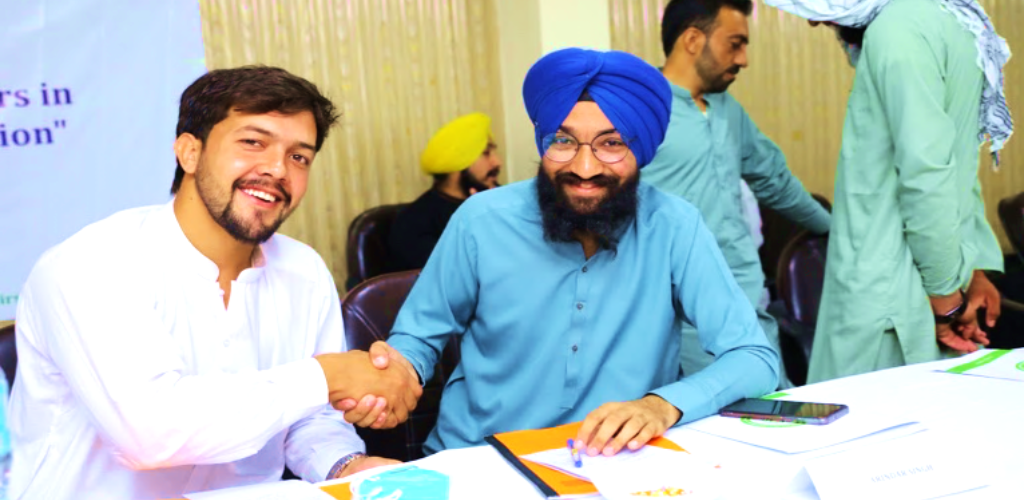
More than a thousand religious journals and magazines are published in Pakistan by madrasas and other religious groups and parties. About 500 of these journals are published on almost regular basis. IRCRA organized media training workshops for the editors and writers of these journals to sensitize and train them for constructive contributions for the betterment of society and reconciliatory ideas. These workshops brought the participants from diverse sectarian magazines and equipped them with knowledge and skills to counter hate speech and hate literature. The trained participants conducted set of follow up activities to amplify and promote peaceful coexistence including peace dialogues and writing many articles. These follow up activities spread the message to thousands of people and positively influence their opinion. The editorial teams of religious media publications were trained and engaged positively, to have an obvious change in the perception and behavior of religious media editors, writers and influencers towards other religions and sects. The religious media actors positively changed their views and perceptions about other religions, sects that is visible in their writing and speeches. ???? Features of Training Workshops for religious media Sessions on Elimination of negative propaganda through peace messaging Raising public awareness about peace, harmony, health literacy and other social issues. Publication of articles promoting peace and tolerance in society. IRCRA had also compiled a compendium of religious journals and analyzed their content. ???? Outcomes/results of the religious media training: Improved knowledge-base and policy input, or recommendations on issues of vital significance for creating awareness among Media in Countering Hate Material and Promotion of Peace. Strengthened tradition of starting a dialogue on sensitive topics regarding hate content subject, discussing sectarianism in a society like Pakistan’s, which lacks the basic values of dialogue and argument among different institutions and groups. Improved understanding and ability of media (editors, writers, reporters & researchers), civil society actors and policymakers to make such platforms in a particular format to start creating awareness campaigns on such topics. Enhanced interaction among representatives of different segments of society and improved opportunity to remove mutually held misperceptions. Participants’ quotes “I hereby also pledge that I will try my best to play my part to raise awareness among community members of my area. I would like to urge that each one of us contribute in advocating dialogue and promoting peace.” Mr. Iqbal Shah Haidri – Participant
February 13, 2023
Sectarian and Interfaith reconciliation in Pakistan
Sectarian strife especially between Sunni and Shias is a bigger challenge for the security and stability of Pakistan since long. Pakistan has witnessed violence and bloodshed instigated by sectarian differences and hatred on religious grounds. IRCRA has engaged thousands of religious leaders, mosque imams, madrasah teachers and interfaith leaders through its awareness raising and capacity building programs during the last 9 years. ???? IRCRA Efforts and IMPACT Towards Sectarian Reconciliation Trainings of religious leaders and madrasah teachers on non-violent resolution of conflicts. Developing a cadre of Imams and religious leaders towards building resilience against extremist rhetoric. Developing and publishing the Narrative of Sectarian Reconciliation and disseminating it widely through media, social media and public and expert gatherings, talks, workshops and seminars. Networking and trust-building between diverse sects & faith leaders. Established platforms of diverse local religious leaders in Punjab, Sindh and Khyber Pakhtunkhwa to resolve sectarian and faith based conflicts.

January 17, 2023
The Role of Religious Media in Promoting Democracy
Religious media plays a vital role in shaping public opinion and promoting democratic values. It serves as a powerful tool for fostering dialogue and understanding among different religious and cultural groups. The International Research Council for Religious Affairs (IRCRA) recognizes the importance of religious media in promoting democracy and peace, and is committed to studying its impact and promoting its responsible use. The Role of Religious Media in Promoting Democracy Religious media can provide a platform for marginalized voices to be heard and for underrepresented groups to participate in public discourse. It can promote tolerance and mutual understanding by providing a space for different religious and cultural perspectives to be shared and discussed. Religious media can also serve as a check on government power by providing an independent source of information and holding leaders accountable. Examples In post-apartheid South Africa, religious leaders and organizations used religious media to promote racial reconciliation and support the transition to democracy. In Indonesia, religious media has played a crucial role in promoting pluralism and tolerance. In the United States, religious media has been used to promote civil rights and social justice issues. The Role of Religious Media in Promoting Peace Religious media can provide a space for peaceful dialogue and conflict resolution. It can promote mutual understanding and respect among different religious and cultural groups. Religious media can also serve as a counterbalance to extremist ideologies and propaganda. Examples In Nigeria, religious media has been used to promote peaceful coexistence and counter the spread of extremist ideologies. In Sri Lanka, religious media has played a role in promoting reconciliation and healing following the country’s civil war. In the Middle East, religious media has been used to promote interfaith dialogue and understanding. Challenges and Opportunities for Religious Media Lack of funding and resources can limit the reach and impact of religious media. The rise of digital media has created new opportunities for religious media, but also new challenges such as disinformation and online extremism. Religious media can also face government censorship and repression in countries with limited freedom of the press. Conclusion Religious media plays a crucial role in promoting democracy and peace. It provides a platform for marginalized voices to be heard, promotes tolerance and mutual understanding, and serves as a check on government power. The International Research Council for Religious Affairs (IRCRA) recognizes the importance of religious media and is committed to studying its impact and promoting its responsible use. Despite the challenges, religious media continues to be an important tool for fostering dialogue and understanding among different religious and cultural groups.
December 14, 2022
Polio Eradication and the Role of International Cooperation in Pakistan
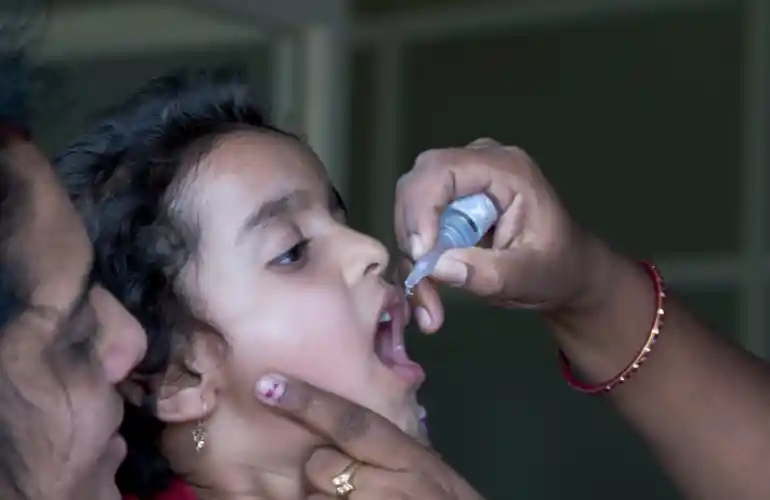
Polio is a highly contagious viral illness that mainly affects children under the age of five. It can cause permanent paralysis, and in some cases, it can be fatal. Pakistan is one of the few countries in the world where the disease is still endemic, and the ongoing efforts to eradicate it have been met with numerous challenges. However, international cooperation has played a crucial role in helping Pakistan make significant progress in the fight against polio. This article will explore the current situation in Pakistan regarding polio and the role that international cooperation has played in the country’s efforts to eradicate the disease. Current Situation in Pakistan Pakistan has been grappling with the problem of polio for many years. As of 2022, Pakistan has reported a total of 20 cases of wild poliovirus, which is a significant decrease from previous years. However, the COVID-19 pandemic has presented new challenges for polio eradication efforts in the country. The pandemic has led to disruptions in vaccination campaigns, and many children have missed their doses as a result. Additionally, misinformation about the virus and vaccine has spread, leading to vaccine hesitancy among some communities. International Cooperation Despite these challenges, international cooperation has played a vital role in Pakistan’s efforts to eradicate polio. The World Health Organization (WHO) and the United Nations Children’s Fund (UNICEF) have been leading the global effort to eradicate polio, and they have provided significant support to Pakistan. The WHO has provided technical assistance, funding, and vaccines to help Pakistan fight the disease. Additionally, UNICEF has provided resources and expertise to support vaccination campaigns and improve surveillance systems. Other international organizations have also played a significant role in supporting Pakistan’s efforts to eradicate polio. The Rotary International, for example, has provided funding for polio eradication efforts in Pakistan and has worked to raise awareness about the disease. The Bill and Melinda Gates Foundation has also provided significant support to Pakistan, including funding for vaccination campaigns and the development of new vaccines. Impact of International Cooperation The support provided by these international organizations has helped Pakistan make significant progress in the fight against polio. For example, the number of reported cases of wild poliovirus in Pakistan has decreased significantly in recent years. Additionally, vaccination coverage in the country has improved, and more children are being reached with the polio vaccine. International cooperation has also helped Pakistan improve its surveillance systems and respond more effectively to outbreaks of the disease. The WHO and UNICEF have provided training and resources to help Pakistan improve its surveillance systems and detect cases of polio more quickly. This has helped Pakistan respond more effectively to outbreaks and reduce the spread of the disease. Challenges Ahead Despite the progress that has been made, Pakistan still faces significant challenges in the fight against polio. The COVID-19 pandemic has presented new challenges for polio eradication efforts, and it will be crucial to address these challenges in order to continue making progress. Additionally, vaccine hesitancy remains a significant challenge, and it will be important to address this issue in order to ensure that more children are reached with the polio vaccine. Conclusion Pakistan has made significant progress in the fight against polio, and international cooperation has played a crucial role in this progress. The support provided by organizations such as the WHO, UNICEF, Rotary International, and the Bill and Melinda Gates Foundation has helped Pakistan improve its vaccination coverage, surveillance systems, and respond more effectively to outbreaks of the disease. However, challenges remain, and it will be important to continue addressing these challenges in order to achieve the goal of polio eradication in Pakistan.
November 24, 2022
Islam and Democracy: Lessons from the Middle East
The relationship between Islam and democracy has been a topic of much debate in recent years, particularly in the Middle East. While some argue that the two are incompatible, others argue that there is no inherent conflict between the two and that Islamic principles can be compatible with democratic values. This article will explore the current state of democracy in the Middle East and examine some of the lessons that can be learned from the region’s experience with Islam and democracy. The State of Democracy in the Middle East The state of democracy in the Middle East is complex and varies greatly from country to country. According to the Democracy Index published by the Economist Intelligence Unit, several Middle Eastern countries, including Bahrain, Oman, Qatar, Saudi Arabia, and the United Arab Emirates, are classified as “authoritarian regimes.” Other countries, such as Iraq, Lebanon, and Yemen, are classified as “flawed democracies.” Only a few countries in the region, such as Israel and Tunisia, are considered to be “full democracies.” Despite this, there have been some positive developments in the region in recent years. For example, in 2011, a wave of protests and uprisings, known as the Arab Spring, swept through several countries in the region, leading to the overthrow of long-time dictators in Tunisia, Egypt, and Libya. In Tunisia, a new democratic government was established, and in Egypt, the military ultimately stepped in to restore order after the fall of President Mubarak. In Libya, however, the situation remains unstable, with the country being torn apart by civil war. In addition, there have been democratic elections in Iraq, Lebanon, and Palestine in recent years, although the situation in these countries remains complex and fluid. Islam and Democracy The relationship between Islam and democracy is a complex one, and there is no one answer that can be applied to all countries in the region. Some argue that Islam and democracy are incompatible, pointing to the fact that many Islamic countries are ruled by authoritarian regimes. Others argue that there is no inherent conflict between the two and that Islamic principles can be compatible with democratic values. One of the key arguments made by those who argue that Islam and democracy are incompatible is that Islamic law, or sharia, is not compatible with the principles of democracy. According to this argument, sharia is based on the absolute authority of God and is therefore incompatible with the principles of human rights and individual freedom that are at the heart of democracy. However, others argue that sharia can be interpreted in a way that is compatible with democratic values. They point to the fact that many Islamic scholars have interpreted sharia in a way that is consistent with democratic principles, and that there are many examples of Islamic countries that have adopted democratic systems without abandoning their Islamic identity. One example of this is Turkey, which has been a secular democracy for many decades. Despite this, Turkey has maintained its Islamic identity, and many of its citizens continue to observe Islamic practices and customs. Another example is Indonesia, which is the largest Muslim-majority country in the world and has a democratic government. Conclusion The relationship between Islam and democracy in the Middle East is a complex one, and there is no one answer that can be applied to all countries in the region. While some argue that the two are incompatible, others argue that there is no inherent conflict between the two and that Islamic principles can be compatible with democratic values. Despite the complex nature of the relationship between Islam and democracy in the Middle East, there have been some positive developments in recent years. The Arab Spring of 2011 led to the overthrow of long-time dictators in Tunisia, Egypt, and Libya, and there have been democratic elections in Iraq, Lebanon, and Palestine in recent years. However, the situation in the region remains fluid, with many countries still facing challenges in their transition to democracy. In order for democracy to take root in the Middle East, it is important for Islamic principles to be integrated into the democratic process. This can be achieved by promoting dialogue and understanding between different religious and political groups, and by encouraging the development of democratic institutions and practices that are consistent with Islamic values. It is also important to recognize that democracy is not a one-size-fits-all solution, and that different countries may require different approaches in order to achieve a stable and sustainable democratic system. International organizations such as the International Research Council for Religious Affairs (IRCRA) can play an important role in supporting and promoting the development of democracy in the Middle East by providing research, education, and resources to support the growth of democratic institutions and practices. In conclusion, the relationship between Islam and democracy in the Middle East is a complex one that requires a nuanced and thoughtful approach. While there are certainly challenges to be faced, there is also potential for democratic values and Islamic principles to coexist in the region. With the support of international organizations and through the promotion of dialogue and understanding between different groups, it is possible for the Middle East to continue to make progress towards a more democratic future.

November 10, 2022
Muslim Democrats and the Intersection of Race and Religion in Politics
Religion and race are two powerful forces that have shaped the political landscape of the United States for decades. In recent years, the intersection of these two factors has become increasingly important as the Muslim population in the country has grown, and as issues of race and discrimination have come to the forefront of public discourse. This article will explore the experiences of Muslim Democrats in the United States and the ways in which race and religion intersect in their political lives. Background The Muslim population in the United States has been growing rapidly in recent years. According to the Pew Research Center, the number of Muslims in the country has more than doubled since 2007, and is projected to continue to grow in the coming years. This growth has been driven by both immigration and higher birth rates among Muslim communities. While the Muslim population in the United States is diverse, with people from many different countries and ethnic backgrounds, the majority are of South Asian or Arab descent. According to the Pew Research Center, roughly half of Muslims in the United States are of South Asian descent, and another quarter are of Arab descent. The political experiences of Muslim Americans are shaped by their intersectional identities as both Muslims and members of ethnic and racial minorities. Muslims in the United States are disproportionately people of color, with a significant number identifying as African American and a smaller but still substantial number identifying as Asian American. Challenges Faced by Muslim Democrats 1. Discrimination and Islamophobia: One of the biggest challenges faced by Muslim Democrats is discrimination and Islamophobia. This can take many forms, from hate speech and physical violence to discrimination in the workplace or in the criminal justice system. Muslim Americans, particularly those who are visibly Muslim, have reported experiencing a range of discrimination, including harassment, discrimination in the workplace, and being targeted by law enforcement. 2. Lack of Representation: Another major challenge faced by Muslim Democrats is the lack of representation in political office. There are currently only two Muslim members of Congress, and there has never been a Muslim governor or president. This lack of representation can make it difficult for Muslim Americans to have their voices heard and their concerns addressed in the political process. 3. Racial and Ethnic Stereotypes: Additionally, Muslim Democrats also face racial and ethnic stereotypes that can shape how they are perceived and treated by others. For example, South Asian and Arab Americans are often perceived as foreigners, even if they were born and raised in the United States, and are sometimes assumed to be Muslim, even if they are not. These stereotypes can lead to discrimination and marginalization in the political process. Opportunities for Muslim Democrats 1. Community Organizing: Despite the challenges faced by Muslim Democrats, there are also opportunities for them to make a difference in the political process. One of the most important ways to do this is through community organizing. This can involve working with other Muslims to register voters, mobilize for political campaigns, and advocate for issues that are important to the Muslim community. 2. Running for Office: Another opportunity for Muslim Democrats is to run for political office themselves. This can be challenging, given the lack of representation in political office, but it is an important way for Muslim Americans to have a voice in the political process. In recent years, there has been an increase in the number of Muslim Americans running for political office at all levels, from local school boards to Congress. 3. Building Coalitions: Additionally, Muslim Democrats can also work to build coalitions with other marginalized communities. This can involve working with other people of color, immigrants, and religious minorities to advocate for issues that affect all of these groups. By building these coalitions, Muslim Democrats can amplify their voices and increase their political power. Conclusion In conclusion, the intersection of race and religion in politics is a complex and multifaceted issue that affects Muslim Democrats in the United States. These individuals face challenges such as discrimination and Islamophobia, lack of representation, and racial and ethnic stereotypes, but there are also opportunities for them to make a difference through community organizing, running for office, and building coalitions. It is important for both the Muslim American community and the larger society to acknowledge and address these issues in order to promote greater representation and equality in the political process. As the International Research Council for Religious Affairs, it is our responsibility to raise awareness about the experiences of Muslim Democrats and the ways in which race and religion intersect in their political lives. We must work towards creating a more inclusive and equitable society where all individuals, regardless of their religion or race, have an equal opportunity to participate in the political process and have their voices heard.

October 5, 2022
Building Community Resilience through Religious and Cultural Diversity
Building community resilience is crucial for addressing and overcoming the challenges faced by society today. One way to achieve this is through promoting religious and cultural diversity. In this article, we will explore the ways in which religious and cultural diversity can contribute to building community resilience and the role of the International Research Council for Religious Affairs (IRCRA) in promoting this goal. Religious and Cultural Diversity: A Key Ingredient for Community Resilience Religious and cultural diversity plays a vital role in building community resilience. A diverse community is better able to handle and adapt to changes and challenges, such as natural disasters, economic downturns, and social tensions. This is because a diverse community brings together a wide range of perspectives, ideas, and resources, which can be harnessed to find creative and effective solutions. Research has shown that religious and cultural diversity can also have a positive impact on community cohesion and social capital. A study conducted by the University of Warwick in the UK found that: Religious diversity is positively associated with social capital, which refers to the networks, norms, and trust that facilitate cooperation and coordination among individuals and groups. Another study by the Interfaith Youth Core found that: Interfaith cooperation, which is a key aspect of religious diversity, can lead to increased civic engagement and social cohesion. A report by the United Nations Development Programme (UNDP) found that: Countries with high levels of religious diversity are more likely to have higher levels of economic growth and human development. Countries with high levels of religious diversity are also more likely to have higher levels of political stability. Promoting Religious and Cultural Diversity: The Role of the IRCRA The IRCRA is a non-profit organization that promotes religious and cultural understanding and cooperation. The organization conducts research, organizes conferences and seminars, and provides resources and training to promote religious and cultural diversity. The IRCRA also works with other organizations and institutions to advance its mission. One of the main ways the IRCRA promotes religious and cultural diversity is through its research programs. The organization conducts research on various topics related to religious and cultural diversity, such as: The impact of religious diversity on social cohesion. The role of religious leaders in promoting interfaith understanding. The relationship between religious diversity and economic development. The findings of this research are used to inform policy and practice and to raise awareness of the importance of religious and cultural diversity. The IRCRA also organizes conferences and seminars to bring together experts, practitioners, and policymakers to discuss and share ideas on promoting religious and cultural diversity. These events provide a platform for exchanging information and best practices and for building networks among individuals and organizations working in this field. In addition, the IRCRA provides resources and training to help individuals and organizations promote religious and cultural diversity.
- 1
- 2