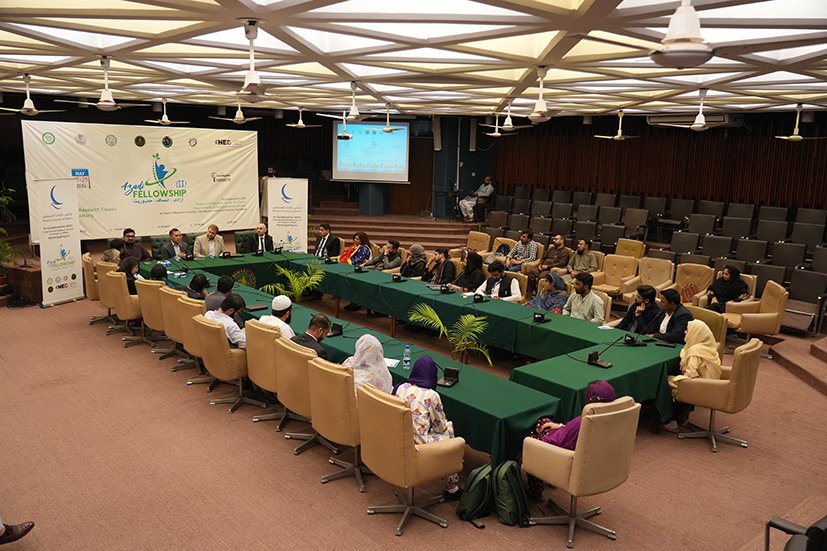
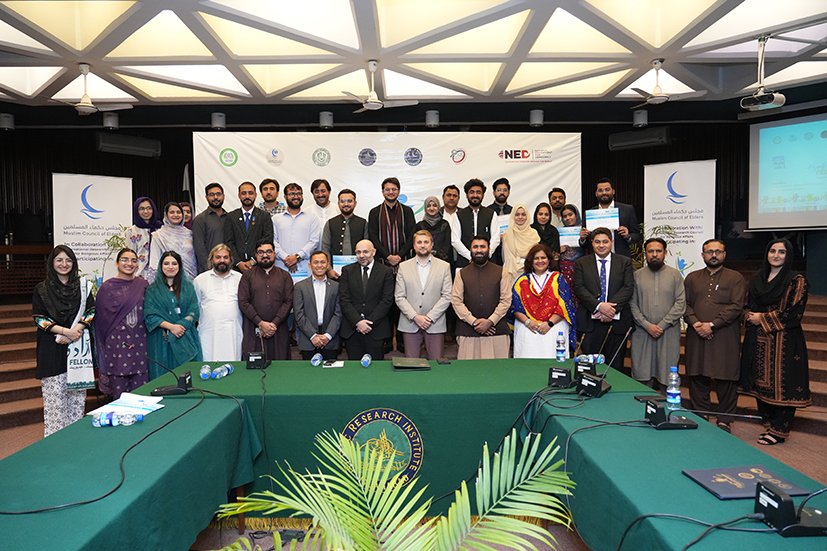
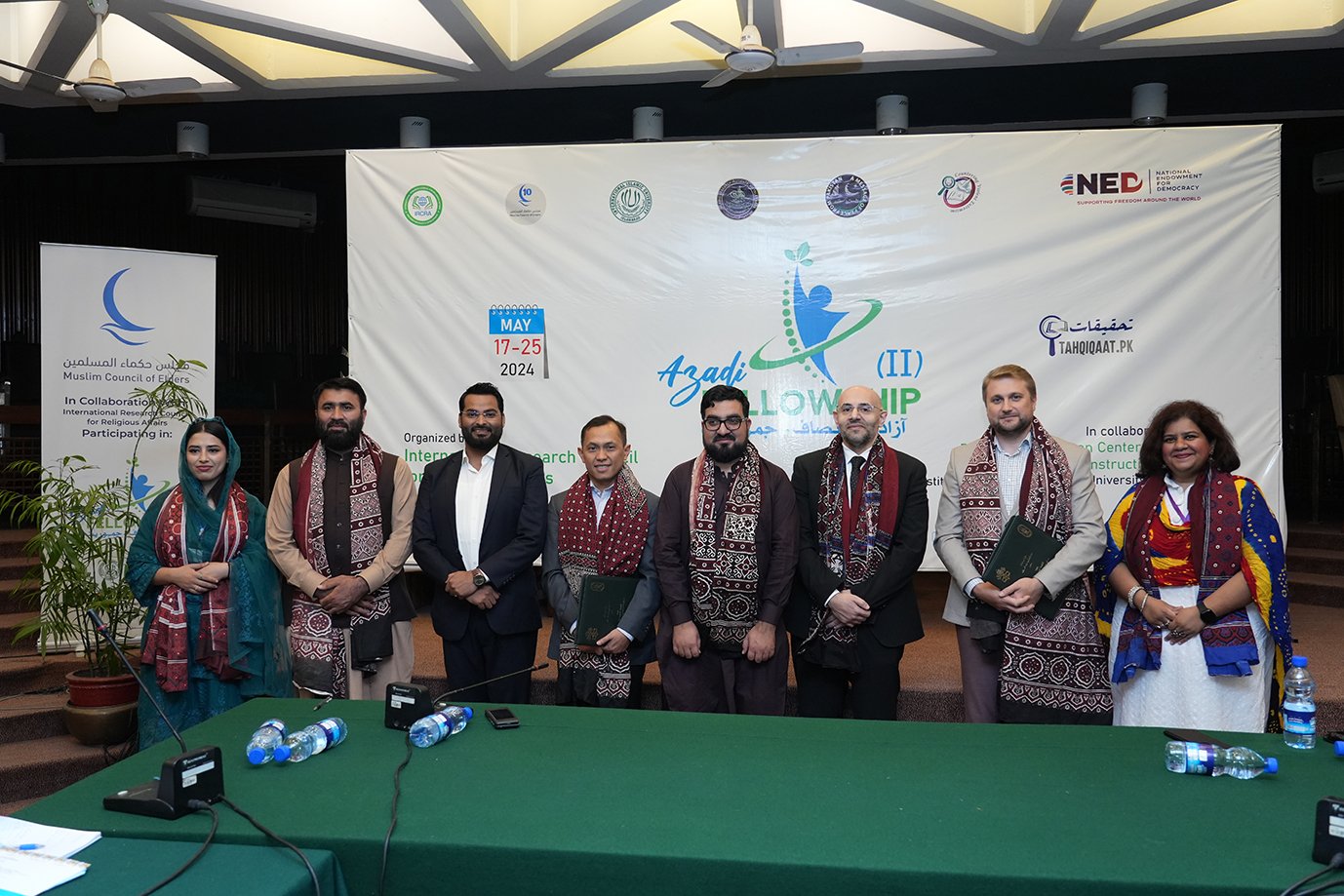
The International Research Council for Religious Affairs (IRCRA), in collaboration with the National Endowment for Democracy (NED), conducted the second cohort of the Azadi Fellowship Program at the Islamic Research Institute, International Islamic University, Islamabad, from May 17 to May 25, 2024. The fellowship aimed to enhance participants’ understanding of religious freedom, democracy, civic engagement, and conflict resolution.
The 9-day program brought together a diverse group of community youth, faith leaders, graduates, students, writers, and scholars from 20 different districts, representing four diverse beliefs and seven ethnicities, including both males and females. During the Azadi Fellowship Program, participants from Baluchistan and Punjab were provided with a platform to openly debate and discuss past conflicts and they got a chance to live and support each other without any grievances. Participants actively engaged in a total of 29 sessions, which included academic lectures, activity-based sessions, panel discussions, and interactive sessions. These sessions addressed themes such as, religious freedom, multiculturalism, conflict resolution, stress management, media trends, climate change, interfaith relations, US-Pakistan relations, regional stability, democratic principles, peace building, and youth empowerment.
A total of 42 national and international speakers, comprising experts, policymakers, and practitioners from various fields, provided valuable insights and perspectives. The fellowship also included nine excursion visits to significant locations such as Dawah Academy, the Institute for Strategic Studies, Research and Analysis at National Defense University, the Institute of Strategic Studies Islamabad (ISSI), the National Assembly of Pakistan, a Church, a Temple, and Lok Virsa Museum. These visits were designed to give participants a comprehensive understanding of Pakistan’s cultural, political, and religious landscape.
The program aimed to be a transformative experience, promoting dialogue, idea exchange, and network building among participants from diverse backgrounds, ultimately contributing to social cohesion and global understanding. Towards the program’s conclusion, participants were introduced to the concept of a “seed project,” encouraging them to implement initiatives that foster democracy, promote peace, and address social challenges within their communities. This initiative aimed to empower participants as active agents of change and to establish a network of individuals committed to advancing democratic principles and societal harmony in their local contexts.
![]() |
|